Financial Literacy

By Sam




If your phone cracked tomorrow, could you fix it without borrowing? If your landlord asked for two months' rent next week, would you have it? If your mom suddenly needed hospital money, would you be the one helping or the one calling around for help?
If the answer is no, this article is for you.
Because for most young Ghanaians, the problem is not income. It is the moment a hospital bill, a broken phone, or a family emergency hits and there is nothing to catch it.
The Debt Loop That Keeps You Stuck
Something breaks. You have no cash. You borrow at 6% to 12% interest or worse, from informal lenders at even higher rates. Repayments eat next month's salary. Then the next emergency hits before you recover.
So you borrow again.
Over time, you are not just paying back money. You are paying back stress, delay, and lost control over your own life. Every month is spoken for before it begins. You stop building anything because you are always catching up.
This is not a personal failure. It is a structural trap and the only real exit is building a cushion before the next emergency arrives.
Not after. Not "when things get better." Now

What Is an Emergency Fund?
An emergency fund is money you set aside strictly for real, unavoidable situations. Not for lifestyle upgrades. Not for trends. Not for impulse spending.
It covers things like medical emergencies, job loss or delayed salary, urgent rent pressure, vehicle breakdowns, and family emergencies that cannot wait.
Think of it as your financial breathing space the difference between reacting under pressure and having time to think.
The target: 3 to 6 months of your basic expenses. For most early-career Ghanaians earning between GHS 2,000 and GHS 5,000 monthly, that works out to roughly GHS 3,000 to GHS 10,000 depending on your lifestyle, location, and commitments.
That number represents survival stability enough time to recover from a shock without falling into a debt cycle.
Why This Matters More in Ghana
In many economies, emergencies are inconvenient. In Ghana, they often become financial setbacks that take months or years to recover from.
Here is why:
Income is often irregular or partially informal
Access to affordable credit is limited
Interest rates on quick loans are punishing
Social support systems are stretched thin
Inflation, though cooling, has already pushed everyday costs significantly higher
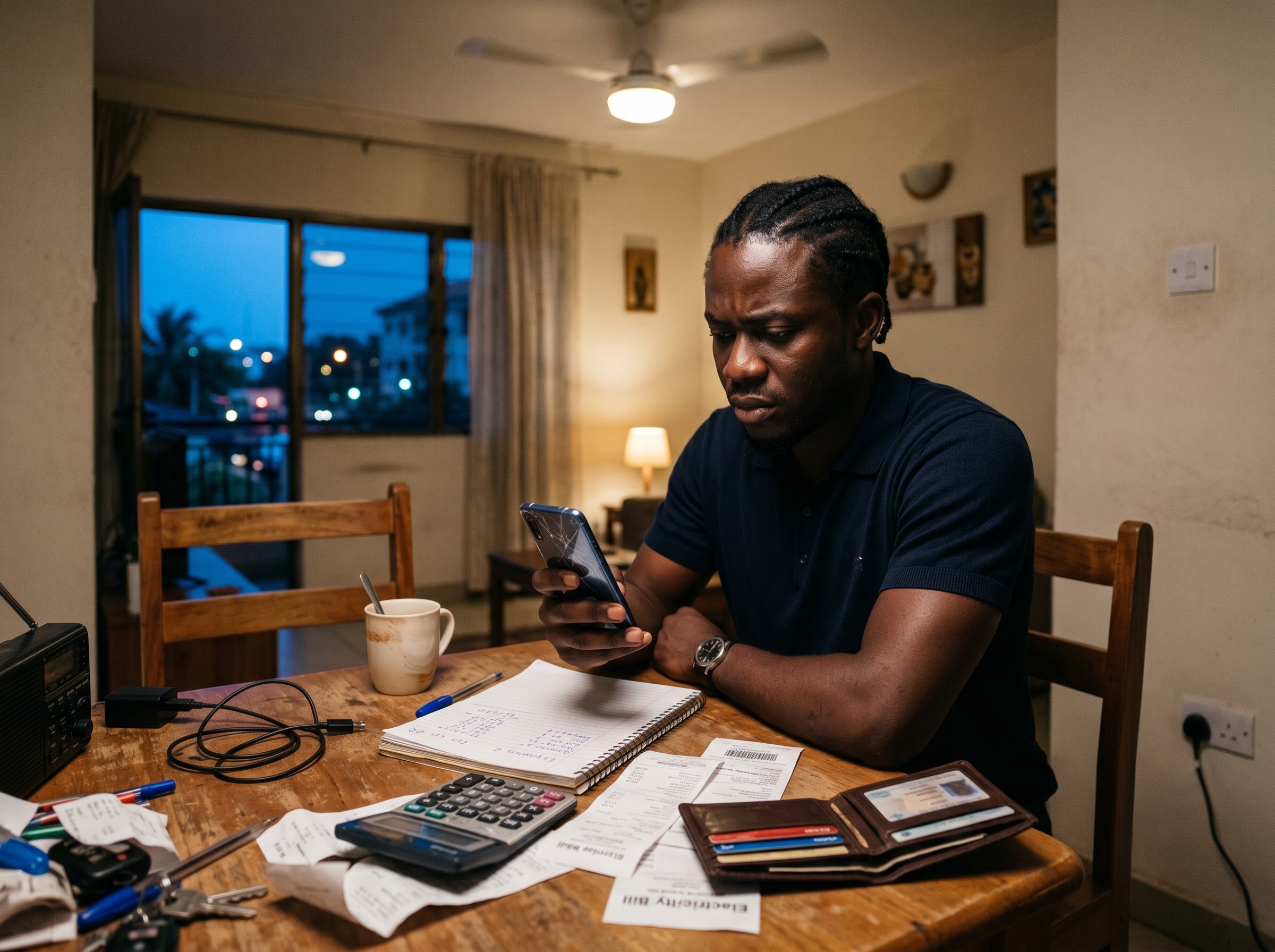
One unexpected expense does not just disrupt your month — it resets your progress. That is why an emergency fund is not a "nice financial habit." It is a survival tool.
It is what separates someone who stays stable after a shock from someone who spends the next six months recovering from it.
"But I Cannot Afford to Save Right Now"
This is the most common belief — and the most expensive one.
Let us make it real.
Can you afford GHS 10 a day?
That is GHS 300 a month. GHS 3,650 a year.
No sudden sacrifice. No drastic lifestyle change. Just consistency.
Most people think saving requires large amounts. It does not. It requires repetition. Even GHS 5 a day is progress — because the habit matters more than the amount.
If you wait for the "right time to save," you are actually waiting for a time when emergencies stop happening. That time does not exist.
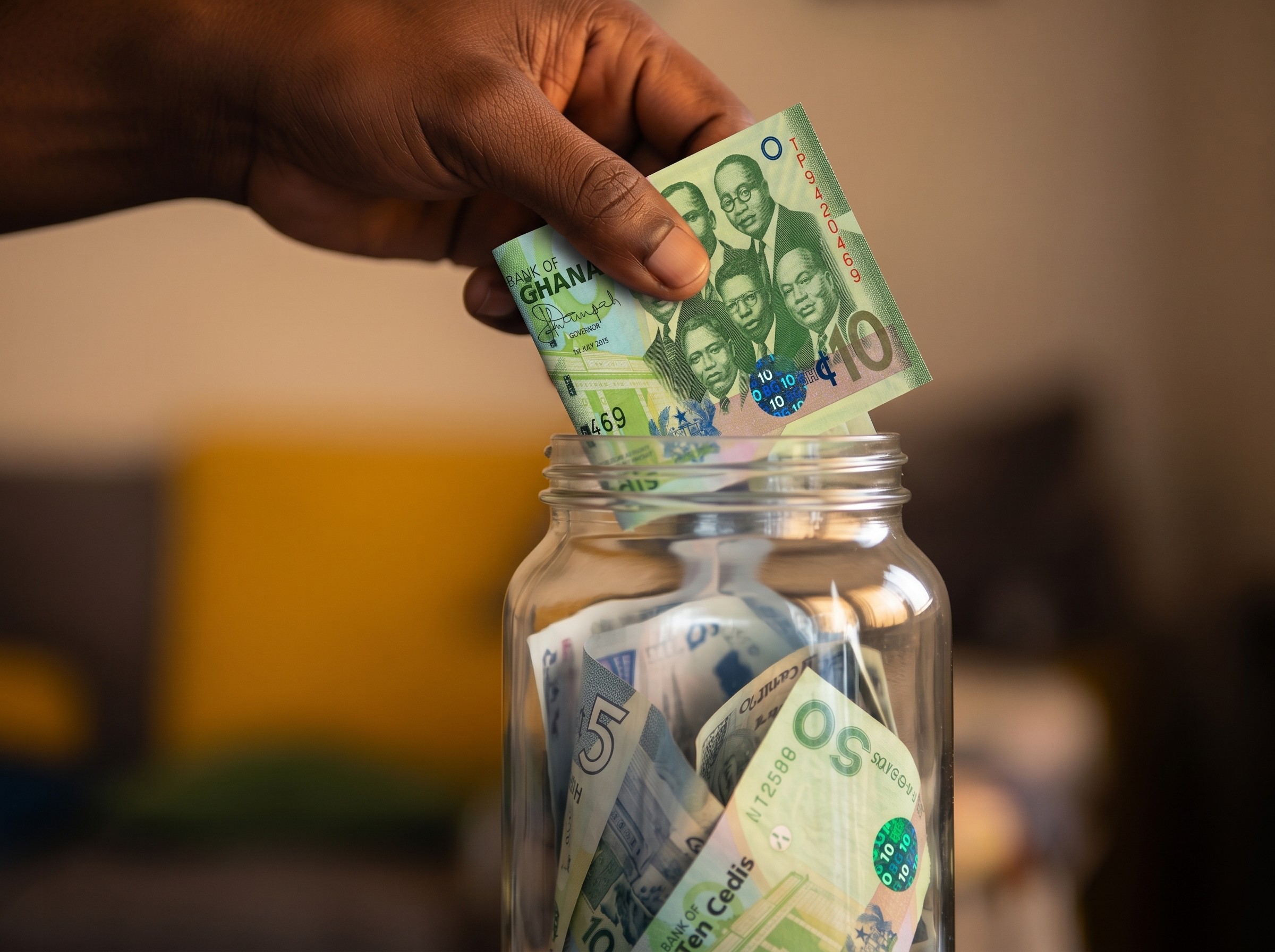
Why Starting Small Beats Waiting for "Big Money"
Emergency funds are not built in moments of motivation. They are built in moments of discipline.
Starting small works because it removes pressure, builds consistency, and creates a new identity — "Iam someone who saves." It makes saving normal, not stressful.
A GHS 10 deposit feels insignificant on its own. But over six months, that is GHS 1,800. Over a year, it is GHS 3,650 — enough to cover two to three months of basic expenses for many young professionals.
That is real protection. And protection changes how you respond to life.
What Changes When You Have an Emergency Fund
Once your emergency fund exists, something shifts:
You stop borrowing under pressure
You make decisions with clarity, not panic
You begin to plan ahead instead of just surviving month to month
You gain control over unexpected situations
You are free to start investing for long-term goals without disruption
It does not make life problem-free. It makes you problem-ready. That difference is everything.
How Phundit Helps You Build One
Phundit is designed to help you do exactly this — not theoretically, but practically.
You can start an emergency fund from as little as GHS 10. Your money goes into the Alpha Plus money market fund, a SEC-regulated investment vehicle managed by Black Star Advisors — which means your emergency fund is not just sitting idle. It is actually earning returns while you build it.
Phundit helps you track your progress clearly, build consistency through regular deposits, and stay committed without relying on willpower alone. And once your emergency cushion is in place, Phundit's goal-based investment tools help you move beyond just surviving — into building real wealth.
No complexity. No financial jargon. No pressure. Just a structured way to build financial stability, step by step.
Final Thought
Most people do not struggle because they do not earn enough. They struggle because they are unprotected when life happens.
An emergency fund is not money sitting idle. It is freedom from panic decisions. It is the foundation everything else gets built on.
Start small. Stay consistent. Build your cushion before you need it.
Because the next emergency will not ask if you are ready. It will just arrive.



Next Blog